Chilling Ghost Stories from UK Prisons – Behind Locked Doors
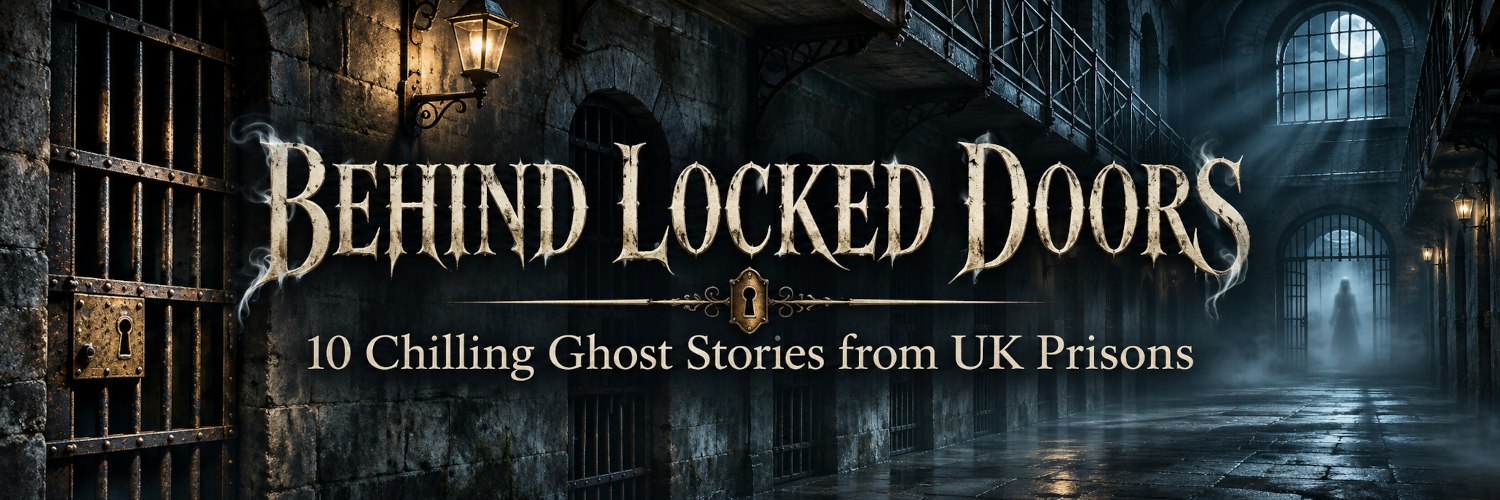
Behind Locked Doors: 10 Chilling Ghost Stories from UK Prisons
A prison is built to keep people inside. Perhaps that is why stories of footsteps in empty wings and figures behind locked doors feel particularly unsettling.
Across the UK, prisoners, staff and visitors have reported experiences they could not explain. These ten original retellings draw on published accounts from prisons and former gaols. They describe alleged encounters, rather than proven supernatural events; where a ghost’s identity belongs to folklore, it remains a legend.
The Grunt Beside the Visitor
Bodmin Jail, Cornwall
Some prison ghost stories begin with a distant sound. At Bodmin Jail, one reportedly happened almost against a visitor’s ear.
An account recorded from 2013 describes a loud grunt heard on the visitor’s left side. Another witness, standing just over a metre away, reportedly heard it too.
There was no need for a figure at the end of a corridor or a face behind bars. The disturbing detail was the apparent closeness of whatever made the noise.
Years earlier, a paranormal group had also reported recording an unexplained grunt during an overnight investigation. Neither account establishes a ghostly cause. Together, however, they leave Bodmin with an uncomfortable question: what had sounded so close to the living?
The Perfume on the Stairs
Shepton Mallet Prison, Somerset
The first sign was not always something anyone could see.
According to an account published by Shepton Mallet Prison, unexplained cold draughts and a sweet perfume disturbed people inside the building. Night officers also reportedly saw pale figures and shadows on the stairs.
These experiences became associated with the White Lady, a familiar presence in the prison’s ghost lore.
Her supposed life story varies between tellings. One version describes a condemned woman who asked to wear her wedding dress and died before her execution. That tragic explanation belongs to legend.
The reported encounters are simpler: a cold wing, an unexpected fragrance and a white shape where an officer did not expect anyone to be standing.
The Shadow in the Wing
Shrewsbury Prison, Shropshire
A shadow usually needs someone to cast it. At Shrewsbury Prison, witnesses have described a dark figure that seemed to stand independently of any living person.
Known as the Shadow Man, it appears in accounts of the prison’s corridors and cells. The prison’s own published stories describe a tall, dark shape, sometimes accompanied by a sudden feeling of dread or of being watched.
Its identity remains unknown. Suggestions about who—or what—it might be are speculation.
That uncertainty gives the story its force. A recognisable face might offer an explanation. A human outline without recognisable features leaves only the impression that someone is occupying the darkness.
And, according to those reports, looking back.
The Man Who Disappeared
Crumlin Road Gaol, Belfast, Northern Ireland
A person walking along a prison wing is hardly an extraordinary sight. The story changes when that person disappears.
Published haunting accounts from Crumlin Road Gaol describe a male figure seen walking along C Wing before vanishing. Reports also mention unexplained voices, including apparent calls for help, and doors heard slamming without an obvious cause.
There is no securely established identity for the man. Attaching a famous prisoner’s name would make the tale neater, but the reported figure remains anonymous.
Perhaps that is why the encounter is so effective as a ghost story. It begins with an ordinary movement in an ordinary passage.
Only its ending makes the witness reconsider what they have seen.
The Moving Pillow
Derby Gaol, Derbyshire
An overnight stay in an old gaol offers plenty of reasons to sleep badly. One visitor reportedly encountered something more personal than unfamiliar noises.
An account dated to 2002 describes an Australian tourist spending the night at Derby Gaol. She reported strange sounds—and a pillow that appeared to move by itself.
The published summary is brief. It does not explain how far the pillow moved or establish what caused the movement.
Yet the small scale of the incident makes it unsettling. A noise elsewhere in a building can remain safely elsewhere. Something moving where a person is trying to sleep brings the mystery into their immediate space.
At Derby, the reported disturbance reached the bed itself.
The Woman at the Window
HMP Low Newton, County Durham
One account from Low Newton carries a specific date: 26 February 2011.
A prisoner reportedly saw a woman standing beside a window in their cell. According to the account, a guard subsequently said that someone had previously died by suicide at the spot where the figure appeared.
That later explanation is part of the reported story, rather than independently established evidence of the apparition’s identity.
The encounter itself is stark. A woman was apparently standing inside a space where her presence required an explanation.
There are no elaborate exchanges or dramatic threats in the published summary. Just a figure at a window, and information afterwards that made the sighting harder for the witness to dismiss.
The Cell Door That Shut
Jedburgh Castle Jail, Scottish Borders
Setting up for a ghost hunt should be the practical part of the evening: equipment, preparations and checking rooms.
At Jedburgh Castle Jail, an event organiser describes a team member working alone when a heavy cell door suddenly slammed shut, enclosing him inside.
The account says an immediate check found nobody nearby. The rest of the team were reportedly accounted for elsewhere.
The organiser also records claims of footsteps, whistling and banging doors at the jail. But this particular incident needs little embellishment.
A prison cell is designed to make a closed door matter. For the person inside, the sound would have transformed an empty historical room into something much closer to its original purpose.
The Footsteps Near Cell Ten
Inveraray Jail, Argyll and Bute
Cell Ten at Inveraray Jail has acquired a reputation for making some visitors uneasy. Accounts describe oppressive feelings and a reluctance to approach it.
One investigation report includes a more specific experience: shuffling footsteps heard in an apparently empty corridor near the cell.
Interestingly, the person reporting them described Cell Ten as feeling warmer than the other cells. The detail resists the familiar ghost-story expectation that every haunting must arrive with an icy chill.
The footsteps were disturbing enough on their own. A shuffle suggests a person moving slowly, close enough to hear and close enough to look for.
In the reported encounter, the sound supplied the movement. The corridor supplied no visible walker.
The Doors After the Tour
Oxford Castle and Prison, Oxfordshire
A guide known as Mr Holloway reportedly finished a tour after discussing Mary Blandy, the eighteenth-century woman executed for poisoning her father.
According to the attraction’s published account, he was changing in the staff room when the door he had closed flew open with a crash. Almost immediately, a nearby fire door opened too.
The account notes that the doors opened in different directions, which those involved felt made a simple draught less convincing.
Colleagues jokingly—or perhaps seriously—suggested that Blandy objected to remarks about her appearance during the tour.
That interpretation cannot be verified. The reported incident remains two doors opening violently in quick succession, after a conversation about a dead prisoner.
The timing supplied the ghost story.
The Grey Lady Upstairs
Lancaster Castle, Lancashire
Lancaster Castle’s prison stories include an apparition associated with the top floor of C Wing.
In an account shared by Lancashire Museums, a castle guide describes reports of a Grey Lady haunting that upper level of the modern prison.
The same collection of stories mentions sightings of a monk or priest elsewhere within the former prison complex. These are reported traditions, and neither figure has a conclusively established identity.
The Grey Lady’s story is especially spare: an upper floor, a female figure and repeated claims that she was there.
Some hauntings gather elaborate biographies over time. This one leaves the central question unanswered. Who was the woman people believed they saw—and why did her presence seem to persist in a place built to control everyone’s movements?
Prison ghost stories often turn on ordinary things: a footstep, a door, a person passing along a corridor. What unsettles the witness is the moment those familiar things stop behaving as expected.
The buildings are real. So are the published reports and the traditions surrounding them. Whether their explanation lies in acoustics, draughts, perception, storytelling or something still unexplained, these accounts give the old prison question a different meaning:
Who else is in here?