Elementals Explained
Elementals Explained
What Are Elementals?
Throughout history, humans have believed that the natural world is inhabited by mysterious forces and invisible beings. Among the most fascinating of these are elementals, spiritual entities traditionally associated with the fundamental elements of nature. Found in folklore, mythology, occult philosophy, and modern spiritual traditions, elementals are believed to embody the energies of earth, air, fire, and water. But what exactly are elementals, where did these beliefs originate, and what significance do they hold today?
Understanding Elementals
Elementals are supernatural or spiritual beings believed to exist within, represent, or influence the natural elements. Unlike ghosts, which are commonly associated with deceased humans, elementals are generally described as nature spirits with their own characteristics, purposes, and forms of existence. In many esoteric traditions, elementals are considered expressions of the living energy of nature. They are sometimes portrayed as intelligent beings capable of interacting with their surroundings, although their appearance and behaviour vary considerably between different belief systems. Some traditions describe elementals as independent spiritual entities, while others interpret them symbolically as representations of natural forces and the relationship between humanity and the environment.
The Four Types of Elementals
The most widely recognised classification of elementals comes from Western esoteric philosophy, particularly the writings of the sixteenth-century physician and alchemist Paracelsus. He associated four categories of elemental beings with the classical elements.
Earth Elementals – Gnomes
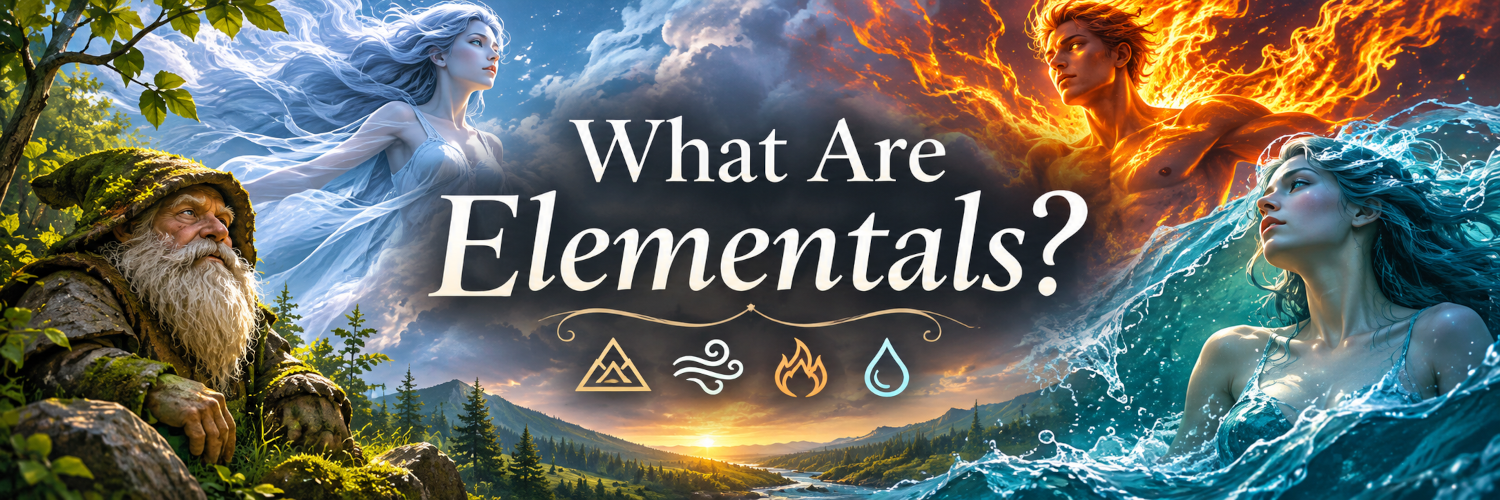
Earth elementals are traditionally known as gnomes. They are associated with mountains, forests, caves, rocks, and the soil beneath our feet. Often depicted as small, humanlike creatures, gnomes symbolise stability, patience, endurance, and material abundance. Within occult traditions, they are sometimes regarded as guardians of minerals, precious stones, and hidden underground treasures. Spiritually, earth elementals represent grounding, physical security, and humanity’s connection with the land.
Air Elementals – Sylphs
Sylphs are the elementals associated with air, wind, clouds, and the atmosphere. They are frequently imagined as delicate, graceful, almost transparent beings that move effortlessly through the sky. Air elementals symbolise freedom, inspiration, communication, and intellectual activity. Some spiritual interpretations connect them with imagination, clarity of thought, and sudden moments of insight. Because air is constantly moving, sylphs are also associated with change, curiosity, and the invisible influences that shape everyday life.
Fire Elementals – Salamanders
Fire elementals are traditionally called salamanders, although they should not be confused with the amphibians sharing the same name. In esoteric descriptions, these beings inhabit flames and embody the transformative power of fire. They represent passion, courage, creativity, purification, and destruction. Fire can provide warmth and sustain life, but it can also consume everything in its path. Consequently, salamanders symbolise both creation and danger, reflecting the unpredictable nature of powerful energies.
Water Elementals – Undines
Undines are associated with rivers, lakes, oceans, springs, and other bodies of water. They are sometimes portrayed as beautiful, fluid beings resembling mermaids or water nymphs. Water elementals traditionally represent emotion, intuition, healing, sensitivity, and the subconscious mind. Just as water changes shape according to its surroundings, undines symbolise adaptability and emotional depth. Their association with flowing water also connects them with renewal, cleansing, and personal transformation.
Where Did the Belief in Elementals Originate?
Although the term elemental became prominent in Western occult philosophy, beliefs in nature spirits are considerably older. Ancient Greek mythology described nymphs inhabiting forests, rivers, mountains, and springs. Various European folk traditions featured beings connected with particular landscapes, while other cultures developed their own distinct beliefs about spirits associated with natural places. Paracelsus helped establish the familiar fourfold classification of gnomes, sylphs, salamanders, and undines. Later, ceremonial magic, Theosophy, and other esoteric movements expanded upon these ideas. However, these traditions should not be treated as identical. Their spiritual interpretations developed within different historical and cultural contexts.
Are Elementals Real?
Whether elementals exist depends largely on personal belief and philosophical perspective. Some practitioners of modern Paganism, witchcraft, and nature-based spirituality regard elementals as genuine spiritual presences. Others understand them as archetypes representing psychological qualities or environmental forces. From a scientific perspective, there is no reliable empirical evidence demonstrating the existence of elementals as independent supernatural beings. Nevertheless, elemental symbolism continues to provide a meaningful framework through which people explore nature, spirituality, and personal development.
Elementals in Modern Spirituality
Today, elementals appear in meditation, visualisation, ritual practices, fantasy literature, and contemporary spiritual teachings. Some individuals use the four elements as symbols for achieving balance in their lives: earth for stability, air for thought, fire for motivation, and water for emotional awareness. These interpretations encourage reflection on the different qualities needed for personal wellbeing and a harmonious relationship with the natural world.
Final Thoughts
Elementals occupy a fascinating space between mythology, spirituality, and human imagination. Whether viewed as supernatural beings, symbolic archetypes, or expressions of ancient folklore, they reflect humanity’s enduring fascination with nature. Ultimately, the concept of elementals invites us to consider the powerful forces shaping our world and the deeper meanings people have historically found within them.
For more information and help, please Get in Touch.